SBI & HDFC Data Leaks: The Shocking Risks to Your Financial Security
1 day ago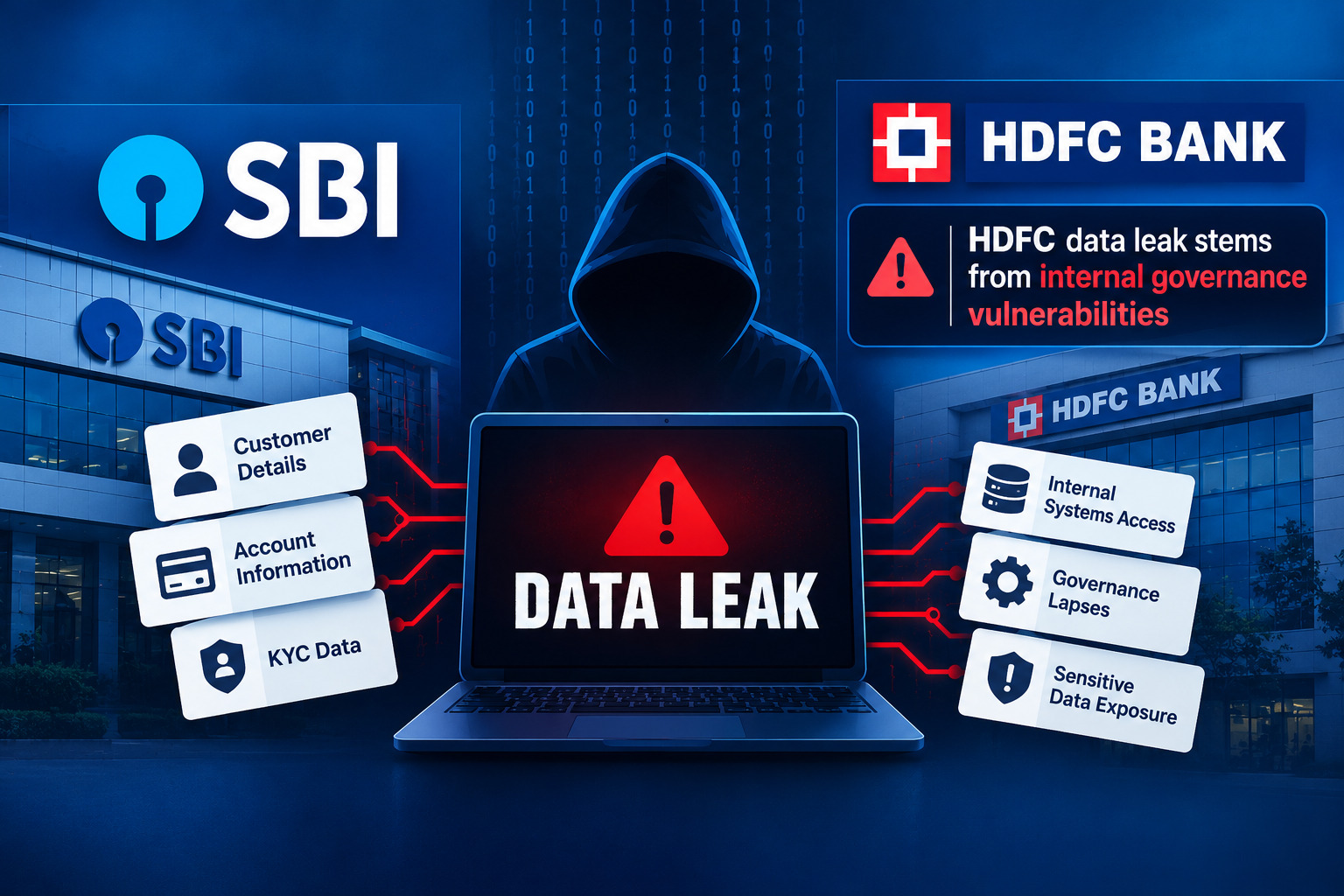
India's financial landscape is facing high-level scrutiny as two of the country's prominent banking institutions suffer severe data exposure incidents. While one lender confronts an external cyber intrusion on the dark web, the other faces internal breaches of confidential corporate strategy during a major executive transition.
Below is an in-depth news report examining the SBI data leak and the HDFC data leak, detailing the facts, reasons, and operational contexts behind both cases.
What Happened & Extent of Exposure
The State Bank of India acknowledged a cybersecurity breach after receiving threat intelligence alerts on October 16 from its threat intelligence provider, the Defence Cyber Agency, and CERT-In. The incident gained public attention following claims by cybersecurity account CyberPulse that a threat actor named Siriusim leaked data linked to the bank containing 3,75,000 CSV rows and 2,722 PDF files.
In a preliminary analysis of the 3.75 lakh records, SBI identified and confirmed that 3,897 customer records containing personal information were exposed.
The Exposed Information & Risk to Customers
The compromised data encompasses sensitive Personally Identifiable Information (PII) and documentation, including:
Personal & Contact Identification: Customer names, registered mobile numbers, email addresses, residential addresses, dates of birth, gender, and Customer Information File (CIF) identifiers.
Loan & Account Documentation: Lead IDs, metadata, loan applications, supporting paperwork, and account-opening forms.
The leakage of this PII directly exposes affected customers to severe cyber risks, specifically impersonation, loan and benefit frauds, and unauthorized existing account takeovers.
Reasons & Bank Response
Root Cause: External threat activity targeting retail data and dark web document dumps.
Remedial Measures: SBI activated its cyber incident response protocols and engaged an independent cybersecurity agency empanelled by CERT-In to investigate the breach's source, determine the completeness of the data, and implement preventive safeguards.
Operational Continuity: SBI confirmed that the incident has had no material impact on its core business operations, financial performance, or business continuity, and all core functions continue operating normally.
An internal investigation at HDFC Bank uncovered evidence that two senior executives shared confidential business plans and potentially market-sensitive information with external parties. The internal probe was launched after leadership within the bank raised concerns regarding potential leaks.
The two executives oversee major business lines and organizational functions. Findings from the probe were presented earlier this year to senior management and select board members, and both executives have been formally notified. An HDFC Bank spokesperson confirmed that an internal review is currently underway to evaluate all relevant facts before determining appropriate disciplinary action.
Unlike external hacker attacks, the HDFC data leak stems from internal governance vulnerabilities unfolding against a turbulent institutional background:
Leadership Transition Stress: The leak coincides with a landmark leadership change at India's largest bank by market value (~$115 billion). Incumbent CEO Sashidhar Jagdishan unexpectedly decided not to seek another term after six years. Anup Bagchi (a veteran from rival ICICI Group) is set to become chief executive on October 27, marking the first time an outsider will lead the bank. Additionally, Deputy Managing Director Kaizad Bharucha has requested to leave at the end of December.
Prior Boardroom Friction: In March, former Chairman Atanu Chakraborty abruptly resigned due to differences between his personal values and certain bank practices. Although a subsequent independent legal review found Chakraborty's concerns unsubstantiated, the incident underscored internal friction.
Stock Performance Pressures: HDFC Bank's share price has fallen approximately 28% this year, heightening internal and market scrutiny over executive control and strategic confidentiality.
Rather than evaluating these incidents as identical threats, a comparative look reveals how vastly different their operational sources and risks are:
In Terms of Threat Vector: TheSBI data leak represents an external cybersecurity breach where customer-facing PII and loan documentation were dumped on the dark web by an outside threat actor. Conversely, the HDFC data leak is an internal compliance breach, where high-level executives allegedly leaked confidential corporate and market-sensitive strategic plans to outsiders.
In Terms of Primary Stakeholder Risk: The primary victims of the SBI breach are individual retail banking customers who face risks of identity theft, loan fraud, and account takeovers. In contrast, the primary impact of the HDFC leak hits corporate governance, market confidence, and institutional strategy, coming at a sensitive moment of management transition and stock performance decline.
In Terms of Investigation Mechanisms: SBI's investigation relies on external digital forensics and independent CERT-In empanelled cybersecurity agencies to trace dark web logs and secure databases. HDFC Bank's response relies on an internal governance review and board management evaluation to enforce organizational ethics and determine executive disciplinary measures.